After twelve years with Quaker Life Representative Council, this was my last weekend at High Leigh Conference Centre, Herts. A few Friends enjoying the morning coffee.
Monday, 20 October 2008


Sunday, 12 October 2008
Tuesday, 7 October 2008
Ruby and Nutty have the grandest fun
On a hill overlooking Bewdley, Nutty and Ruby play in the late afternoon sun.
Sunday, 5 October 2008
Sabrina and the Engineer - conclusion at Bridgenorth
It isn't possible to do justice to this spectacle, but I can add a few shots, and suggest you hunt for it on the internet. The water display was even better, and the idea of projecting the film on to a waterfall was inspired. But all I have is a set of snaps, more a record for Sarah and I, who loved the whole thing. Thanks to all concerned.
Tuesday, 30 September 2008
Tuesday, 23 September 2008
Saturday, 13 September 2008
Sunday, 13 July 2008
On friendship and solitude
I'm afraid this one has become a sort of motto with me. There is, I am sure, a later reference to love, Robert and solitude, but this one deals with the vacuity of friendship - the sheer waste of time.
So - go and live for yourself!
People who enjoy the capacity—it is true that such people are artists, and I had long been convinced that I should never be that—are also under an obligation to live for themselves. And friendship is a dispensation from this duty, an abdication of self. Even conversation, which is the mode of expression of friendship, is a superficial digression which gives us no new acquisition. We may talk for a lifetime without doing more than indefinitely repeat the vacuity of a minute, whereas the march of thought in the solitary travail of artistic creation proceeds downwards, into the depths, in the only direction that is not closed to us, along which we are free to advance—though with more effort, it is true—towards a goal of truth. And friendship is not merely devoid of virtue, like conversation, it is fatal to us as well.
So - go and live for yourself!
On presentiment
Our narrator, and in this instance I am sure the author too, explains the nature of presentiment, which is fine if you forget all the instances when it has no effect. Expressed far more elegantly by Proust, of course:
“I should very much like, if you have such a thing, a photograph of the little picture of Miss Sacripant. ‘Sacripant’—that’s not a real name, surely?” “It is the name of a character the sitter played in a stupid little musical comedy.” “But, I assure you, sir, I have never set eyes on her; you look as though you thought that I knew her.” Elstir was silent. “It isn’t Mme. Swann, before she was married?” I hazarded, in one of those sudden fortuitous stumblings upon the truth, which are rare enough in all conscience, and yet give, in the long run, a certain cumulative support to the theory of presentiments, provided that one takes care to forget all the wrong guesses that would invalidate it.
Thursday, 10 July 2008
Reflections on ones own past
Our narrator has met the painter Elstir, and made the realisation that this is the same painter who was considered to be of ill repute by the Verdurins. Instead of brushing off the young narrator, Elstir draws from the encounter something useful to a developing mind:
“There is no man,” he began, “however wise, who has not at some period of his youth said things, or lived in a way the consciousness of which is so unpleasant to him in later life that he would gladly, if he could, expunge it from his memory. And yet he ought not entirely to regret it, because he cannot be certain that he has indeed become a wise man—so far as it is possible for any of us to be wise—unless he has passed through all the fatuous or unwholesome incarnations by which that ultimate stage must be preceded. I know that there are young fellows, the sons and grandsons of famous men, whose masters have instilled into them nobility of mind and moral refinement in their schooldays. They have, perhaps, when they look back upon their past lives, nothing to retract; they can, if they choose, publish a signed account of everything they have ever said or done; but they are poor creatures, feeble descendants of doctrinaires, and their wisdom is negative and sterile. We are not provided with wisdom, we must discover it for ourselves, after a journey through the wilderness which no one else can take for us, an effort which no one can spare us, for our wisdom is the point of view from which we come at last to regard the world. The lives that you admire, the attitudes that seem noble to you are not the result of training at home, by a father, or by masters at school, they have sprung from beginnings of a very different order, by reaction from the influence of everything evil or commonplace that prevailed round about them. They represent a struggle and a victory. I can see that the picture of what we once were, in early youth, may not be recognisable and cannot, certainly, be pleasing to contemplate in later life. But we must not deny the truth of it, for it is evidence that we have really lived, that it is in accordance with the laws of life and of the mind that we have, from the common elements of life, of the life of studios, of artistic groups—assuming that one is a painter—extracted something that goes beyond them.”
Wednesday, 2 July 2008
Reflections on love
Our narrator muses on the little band of girls on the beach at Balbec:
I had guessed long ago in the Champs-Elysées, and had since established to my own satisfaction, that when we are in love with a woman we simply project into her a state of our own soul, that the important thing is, therefore, not the worth of the woman but the depth of the state; and that the emotions which a young girl of no kind of distinction arouses in us can enable us to bring to the surface of our consciousness some of the most intimate parts of our being, more personal, more remote, more essential than would be reached by the pleasure that we derive from the conversation of a great man or even from the admiring contemplation of his work.
The Robert Saint Loup fan club
I just love this bit - the women who might be talking about Robert, and his latest flame:
He had, in fact, before he made the acquaintance of his present mistress, lived so much in the restricted world of amorous adventure that all the women who would be dining on these evenings at Rivebelle, where many of them had appeared quite by chance, having come to the coast some to join their lovers, others in the hope of finding fresh lovers there, there was scarcely one that he did not know from having spent—or if not he, one or other of his friends—at least one night in their company. He did not bow to them if they were with men, and they, albeit they looked more at him than at anyone else, for the indifference which he was known to feel towards every woman who was not his mistress gave him in their eyes an exceptional interest, appeared not to know him. But you could hear them whispering:
He had, in fact, before he made the acquaintance of his present mistress, lived so much in the restricted world of amorous adventure that all the women who would be dining on these evenings at Rivebelle, where many of them had appeared quite by chance, having come to the coast some to join their lovers, others in the hope of finding fresh lovers there, there was scarcely one that he did not know from having spent—or if not he, one or other of his friends—at least one night in their company. He did not bow to them if they were with men, and they, albeit they looked more at him than at anyone else, for the indifference which he was known to feel towards every woman who was not his mistress gave him in their eyes an exceptional interest, appeared not to know him. But you could hear them whispering:
“That’s young Saint-Loup. It seems he’s still quite gone on that girl of his. Got it bad, he has. What a dear boy! I think he’s just wonderful; and what style! Some girls do have all the luck, don’t they? And he’s so nice in every way. I saw a lot of him when I was with d’Orléans. They were quite inseparable, those two. He was going the pace, that time. But he’s given it all up now, she can’t complain. She’s had a good run of luck, that she can say. And I ask you, what in the world can he see in her? He must be a bit of a chump, when all’s said and done. She’s got feet like boats, whiskers like an American, and her undies are filthy. I can tell you, a little shop girl would be ashamed to be seen in her knickers. Do just look at his eyes a moment; you would jump into the fire for a man like that. Hush, don’t say a word; he’s seen me; look, he’s smiling. Oh, he remembers me all right. Just you mention my name to him, and see what he says!”
Tuesday, 1 July 2008
M. de Charlus, on photographs
Our strange friend the baron is telling grandmother about his family - with a lovely reference to the power of a photograph.


His voice rose. “It reminds me of a room in the Château of Blois where the caretaker who was shewing me over said: ‘This is where Mary Stuart used to say her prayers; I use it to keep my brooms in.’ Naturally I wish to know nothing more of this house that has let itself be dishonoured, any more than of my cousin Clara de Chimay after she left her husband. But I keep a photograph of the house, when it was still unspoiled, just as I keep one of the Princess before her large eyes had learned to gaze on anyone but my cousin. A photograph acquires something of the dignity which it ordinarily lacks when it ceases to be a reproduction of reality and shews us things that no longer exist. I could give you a copy, since you are interested in that style of architecture,” he said to my grandmother.
Monday, 30 June 2008
Oh dear, I'm right in trouble now
Actually, that was an expression of Lulu's. Sam had another description of this email.
As one of the religiously challenged, or faith impaired as referred to below, I think this is meant to either make me shit my pants, or inspire me to sainthood. Actually, as a cheerful atheist, I think I am curious why one would pass on a threat like the one below - something unlucky if I don't respond. Ah well, here's to my unlucky event!
Pip pip
Colin

(I think this is the fire of hell, in which I might be destined to burn)
As one of the religiously challenged, or faith impaired as referred to below, I think this is meant to either make me shit my pants, or inspire me to sainthood. Actually, as a cheerful atheist, I think I am curious why one would pass on a threat like the one below - something unlucky if I don't respond. Ah well, here's to my unlucky event!
Pip pip
Colin
If God brings you to it he'll bring you through it.............
Read this...I mean REALLY read this
(I think this is the fire of hell, in which I might be destined to burn)
This is without a doubt one of the nicest good luck forwards I have received.. Hope it works for you -- and me!
You have 6 minutes
There's some mighty fine advice in these words, even if you're not superstitious. This has been sent To you for good luck from the Anthony Robbins organization. It has been sent around the world ten times so Far.
Do not keep this message.
This must leave your hands in 6 MINUTES. Otherwise you will get a very unpleasant surprise. This is true, even if you are not superstitious, agnostic, or otherwise faith impaired.
ONE. Give people more than they expect and do it cheerfully.
TWO . Marry a man/woman you love to talk to. As you get older, their conversational skills will be as important as any other.
THREE. Don't believe all you hear, spend all you have or sleep all you want.
FOUR . When you say, 'I love you ,' mean it.
FIVE. When you say, 'I'm sorry,' look the person in the eye.
SIX. Be engaged at least six months before you get married.
SEVEN. Believe in love at first sight.
EIGHT. Never laugh at anyone's dream. People who don't have dreams don't have much.
NINE . Love deeply and passionately. You might get hurt but it's the only way to live life completely.
TEN. . In disagreements, fight fairly. No name calling.
ELEVEN . Don't judge people by their relatives.
TWELVE. Talk slowly but think quickly.
THIRTEEN . When someone asks you a question you don't want to answer, smile and ask, 'Why do you want to know?'
FOURTEEN . Remember that great love and great achievements involve great risk.
FIFTEEN. Say 'bless you' when you hear someone sneeze.
SIXTEEN. When you lose, don't lose the lesson !
SEVENTEEN . Remember the three R's: Respect for self; Respect for others; and responsibility for all your actions.
EIGHTEEN. Don't let a little dispute injure a great friendship..
NINETEEN. When you realize you've made a mistake, take immediate steps to correct it.
TWENTY. Smile when picking up the phone. The caller will hear it in your voice.
TWENTY-ONE. Spend some time alone.
Now, here's the FUN part!
Send this to at least 5 people and your life will improve. 1-4 people: Your life will improve slightly.
5-9 people: Your life will improve to your liking.
9-14 people: You will have at least 5 surprises in the next 3 weeks
15 and above: Your life will improve drastically and everything you ever dreamed of will begin to take shape.
A true friend is someone who reaches for your hand and touches your heart. Do not keep this message
Wednesday, 18 June 2008
Is this real love?
Reflections on Robert Saint-Loup
He was not afraid to make fun of my weaknesses—which he had discerned with an acuteness that made her smile—but as she herself would have done, lovingly, at the same time extolling my good qualities with a warmth, an impulsive freedom that shewed no sign of the reserve, the coldness by means of which young men of his age are apt to suppose that they give themselves importance. And he shewed in forestalling every discomfort, however slight, in covering my legs if the day had turned cold without my noticing it, in arranging (without telling me) to stay later with me in the evening if he thought that I was depressed or felt unwell, a vigilance which, from the point of view of my health, for which a more hardening discipline would perhaps have been better, my grandmother found almost excessive, though as a proof of his affection for myself she was deeply touched by it.
Friday, 13 June 2008
Reflection on human nature

Undoubtedly, it is not common sense that is “the commonest thing in the world”; but human kindness. In the most distant, the most desolate ends of the earth, we marvel to see it blossom of its own accord, as in a remote valley a poppy like the poppies in the world beyond, poppies which it has never seen as it has never known aught but the wind that, now and again, stirring the folds of its scarlet cloak, disturbs its solitude. Even if this human kindness, paralysed by self-interest, is not exercised, it exists none the less, and whenever any inconstant egoist does not restrain its action, when, for example, he is reading a novel or a newspaper, it will bud, blossom, grow, even in the heart of him who, cold-blooded in real life, has retained a tender heart, as a lover of fiction, for the weak, the righteous and the persecuted.
Thursday, 12 June 2008
First siting of Robert
He strode rapidly across the hotel, seeming to be in pursuit of his monocle, which kept darting away in front of him like a butterfly.
Tuesday, 10 June 2008
A look at local life, with the Northamptonshire Evening Telegraph
So funny I had to blog it. Not the accident, that isn't funny, nor the cup of tea for the driver, but the fact that a reporter actually sat and wrote this.
Binman thrown 20ft in collision with car
Binman hit by car
A binman hit by a car while working in a street in Great Addington was thrown 20ft across the road and landed in a hedge.
The air ambulance was called to treat the council worker, who was hit while doing his rounds in Rushwell Close, Great Addington, at about 10.25am on Thursday.
The extent of the man's injuries are not known, but witnesses say he was still conscious at the scene.
George Hall, who is retired and lives in Cranford Road, said: "It was about 10.25am and we were in our front garden.
"I heard a loud bang and I saw the car hit the binman.
"It twisted him around and he went over the bonnet and cartwheeled through the air.
"He must have flown about 20 feet, diagonally across the road and landed in my hedge.
"He is a nice man. I hope he will be okay."
Mr Hall's wife Mary said the binman was lucky not to land on the concrete pavement.
She said: "His head went in the hedge, or he would have been in a much worse condition.
"The driver of the car was terrified and kept asking if she had killed him.
"I told her he was groaning a lot so he must be alive. Someone called an ambulance, and then the air ambulance was called out.
"I took the driver inside and gave her a cup of tea because she was so shaken up."
Neighbour Linda Nicholson said the street was blocked off and the air ambulance landed in a field across the road.
She said: "The dustbin lorry had to be moved so they could get out of the gate.
"After the man was taken to hospital the police came and measured the road."
Northamptonshire Police could not give any more details on the incident.
A pretty girl at the seaside
Our friend the narrator has been out riding with Mme. de Villeparisis, around the villages of Balbec:
As to the pretty girls who went past, from the day on which I had first known that their cheeks could be kissed, I had become curious about their souls. And the universe had appeared to me more interesting.

Sunday, 8 June 2008


Wednesday, 14 May 2008
More words of wisdom from our friend.
Within a Budding Grove - Volume One:
'“This is all between ourselves,” said Bergotte as he left me outside my own door. A few years later I should have answered: “I never repeat things.” That is the ritual phrase of society, from which the slanderer always derives a false reassurance. It is what I should have said then and there to Bergotte, for one does not invent all one’s speeches, especially when one is acting merely as a card in the social pack. But I did not yet know the formula. What my great-aunt, on the other hand, would have said on a similar occasion was: “If you don’t wish it to be repeated, why do you say it?” That is the answer of the unsociable, of the quarrelsome. I was nothing of that sort: I bowed my head in silence.'
Let us all try to not speak ill of one another, eh?
'“This is all between ourselves,” said Bergotte as he left me outside my own door. A few years later I should have answered: “I never repeat things.” That is the ritual phrase of society, from which the slanderer always derives a false reassurance. It is what I should have said then and there to Bergotte, for one does not invent all one’s speeches, especially when one is acting merely as a card in the social pack. But I did not yet know the formula. What my great-aunt, on the other hand, would have said on a similar occasion was: “If you don’t wish it to be repeated, why do you say it?” That is the answer of the unsociable, of the quarrelsome. I was nothing of that sort: I bowed my head in silence.'
Let us all try to not speak ill of one another, eh?
Sunday, 6 April 2008
Samanlou make the dinner
Sam and Lulu made a lovely dinner, and Little Momma, Big Daddy and Miss Jones loved it. Actually, I make the dinner quite often, and so does Little Momma, and no one takes our picture. But thanks gals - marvellous.
Sunday, 27 January 2008
The end of the day.

Our narrator is looking back from his vast distance of time, and sad that the Bois he loved is no more, that elegant ladies no longer stroll beside their carriages, with a style and grace that was a joy to see. And I have come to the end of volume one, and going to leave this blog at that. As I come upon favourite quotes I shall add them, but no more big chunks. I know some of you have enjoyed this, and hope you get as much pleasure in the future as I continue to get from Proust.
The reality that I had known no longer existed. It sufficed that Mme. Swann
did not appear, in the same attire and at the same moment, for the whole avenue
to be altered. The places that we have known belong now only to the little world
of space on which we map them for our own convenience. None of them was ever
more than a thin slice, held between the contiguous impressions that composed
our life at that time; remembrance of a particular form is but regret for a
particular moment; and houses, roads, avenues are as fugitive, alas, as the
years.
Sunday, 20 January 2008
Bedrooms and sleepless nights.
PLACE-NAMES: THE NAME
Among the rooms which used most commonly to take shape in my mind during my long nights of sleeplessness, there was none that differed more utterly from the rooms at Combray, thickly powdered with the motes of an atmosphere granular, pollenous, edible and instinct with piety, than my room in the Grand Hôtel de la Plage, at Balbec, the walls of which, washed with ripolin, contained, like the polished sides of a basin in which the water glows with a blue, lurking fire, a finer air, pure, azure-tinted, saline.

Saturday, 19 January 2008
Charles Swann - free of Odette at last

Our hero, Charles Swann, now believes himself to be free of his love for Odette. The pain, jealousy and anguish are over (for now). The end of the volume finds him reflecting on this experience.
But while, an hour after his awakening, he was giving instructions to the barber, so that his stiffly brushed hair should not become disarranged on the journey, he thought once again of his dream; he saw once again, as he had felt them close beside him, Odette’s pallid complexion, her too thin cheeks, her drawn features, her tired eyes, all the things which—in the course of those successive bursts of affection which had made of his enduring love for Odette a long oblivion of the first impression that he had formed of her—he had ceased to observe after the first few days of their intimacy, days to which, doubtless, while he slept, his memory had returned to seek the exact sensation of those things. And with that old, intermittent fatuity, which reappeared in him now that he was no longer unhappy, and lowered, at the same time, the average level of his morality, he cried out in his heart: “To think that I have wasted years of my life, that I have longed for death, that the greatest love that I have ever known has been for a woman who did not please me, who was not in my style!”
In one film version of Time Regained, Odette de Crecy was played by Catherine Deneuve. Most beautifully, one might add.
Swann meets an old friend on an omnibus

Our dear friend Swann meets Mme Cottard on an omnibus, and she tells him all about Odette and the boating trip with the Verdurins. So engaged in conversation is she, that she almost misses her stop. But she never loses her sense of form, and even though Swann has long been out of favour with the little gang, she doesn't hesitate to offer him her hand in parting.
And Mme. Cottard withdrew from her muff, to offer it to Swann, a white-gloved hand from which there floated, with a transier-ticket, an atmosphere of fashionable life that pervaded the omnibus, blended with the harsher fragrance of newly cleaned kid. And Swann felt himself overflowing with gratitude to her, as well as to Mme. Verdurin (and almost to Odette, for the feeling that he now entertained for her was no longer tinged with pain, was scarcely even to be described, now, as love), while from the platform of the omnibus he followed her with loving eyes, as she gallantly threaded her way along the Rue Bonaparte, her plume erect, her skirt held up in one hand, while in the other she clasped her umbrella and her card-case, so that its monogram could be seen, her muff dancing in the air before her as she went.
Friday, 11 January 2008
One for you to try at home.
First we find the Princess de Laumes in a reflective mood:
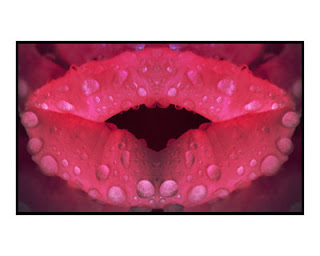
The Princess de Laumes is enjoying the Chopin, and found it quite 'ch charming', so that her lips... Do read on:
Pip pip
Brought up in a provincial household with few friends or visitors, hardly ever invited to a ball, she had fuddled her mind, in the solitude of her old manor-house, over setting the pace, now crawling-slow, now passionate, whirling, breathless, for all those imaginary waltzing couples, gathering them like flowers, leaving the ball-room for a moment to listen, where the wind sighed among the pine-trees, on the shore of the lake, and seeing of a sudden advancing towards her, more different from anything one had ever dreamed of than earthly lovers are, a slender young man, whose voice was resonant and strange and false, in white gloves.

The Princess de Laumes is enjoying the Chopin, and found it quite 'ch charming', so that her lips... Do read on:
And so Mme. des Laumes could let her head sway to and fro, fully aware of the cause, with a perfect appreciation of the manner in which the pianist was rendering this Prelude, since she knew it by heart. The closing notes of the phrase that he had begun sounded already on her lips. And she murmured “How charming it is!” with a stress on the opening consonants of the adjective, a token of her refinement by which she felt her lips so romantically compressed, like the petals of a beautiful, budding flower, that she instinctively brought her eyes into harmony, illuminating them for a moment with a vague and sentimental gaze.So do practise saying 'charming' until your lips are like the petals of a beautiful, budding flower.
Pip pip
Tuesday, 8 January 2008
Odette begins to tire of Swan, or at least somewhat cool towards him.
In the first flashes of love, Odette would do many things to demonstrate her affection for our friend Charles Swann, but now she behaves in a very different manner.
"It sometimes happened, again, that, when, after meeting Swann, she saw some man approaching whom he did not know, he could distinguish upon Odette’s face that look of sorrow which she had worn on the day when he had come to her while Forcheville was there. But this was rare; for, on the days when, in spite of all that she had to do, and of her dread of what people would think, she did actually manage to see Swann, the predominant quality in her attitude, now, was self-assurance; a striking contrast, perhaps an unconscious revenge for, perhaps a natural reaction from the timorous emotion which, in the early days of their friendship, she had felt in his presence, and even in his absence, when she began a letter to him with the words: “My dear, my hand trembles so that I can scarcely write.” (So, at least, she pretended, and a little of that emotion must have been sincere, or she would not have been anxious to enlarge and emphasise it.) So Swann had been pleasing to her then. Our hands do not tremble except for ourselves, or for those whom we love. When they have ceased to control our happiness how peaceful, how easy, how bold do we become in their presence!"
Saturday, 5 January 2008
Swann in Love
Over the last few days I have been reading the chapter 'Swann in Love', and there are no short little quotable quotes that I can discern, save the start of long sentences or bits that occur at the end of longer passages that might need some explanation. I love the opening lines 'To be adimitted....', so I have chosen them, a middle bit about Swann's thoughts on Odetter (the lady in pink of the Uncle Adolphe episode', and Swanns fall from grace in the salon of the Verdurins'. As I recall, I am ending around the point when Swann truly realises he is on love with Odetter.
'To admit you to the ‘little nucleus,’ the ‘little group,’ the ‘little clan’ at the Verdurins’, one condition sufficed, but that one was indispensable; you must give tacit adherence to a Creed one of whose articles was that the young pianist, whom Mme. Verdurin had taken under her patronage that year, and of whom she said “Really, it oughtn’t to be allowed, to play Wagner as well as that!” left both Planté and Rubinstein ‘sitting’; while Dr. Cottard was a more brilliant diagnostician than Potain. Each ‘new recruit’ whom the Verdurins failed to persuade that the evenings spent by other people, in other houses than theirs, were as dull as ditch-water, saw himself banished forthwith. Women being in this respect more rebellious than men, more reluctant to lay aside all worldly curiosity and the desire to find out for themselves whether other drawing-rooms might not sometimes be as entertaining, and the Verdurins feeling, moreover, that this critical spirit and this demon of frivolity might, by their contagion, prove fatal to the orthodoxy of the little church, they had been obliged to expel, one after another, all those of the ‘faithful’ who were of the female sex.'
'He no longer based his estimate of the merit of Odette’s face on the more or less good quality of her cheeks, and the softness and sweetness—as of carnation-petals—which, he supposed, would greet his lips there, should he ever hazard an embrace, but regarded it rather as a skein of subtle and lovely silken threads, which his gazing eyes collected and wound together, following the curving line from the skein to the ball, where he mingled the cadence of her neck with the spring of her hair and the droop of her eyelids, as though from a portrait of herself, in which her type was made clearly intelligible.'
But before we lose Swann from the salon, there was the episode with the cattleyas:
'She had in her hand a bunch of cattleyas, and Swann could see, beneath the film of lace that covered her head, more of the same flowers fastened to a swansdown plume. She was wearing, under her cloak, a flowing gown of black velvet, caught up on one side so as to reveal a large triangular patch of her white silk skirt, with an ‘insertion,’ also of white silk, in the cleft of her low-necked bodice, in which were fastened a few more cattleyas. She had scarcely recovered from the shock which the sight of Swann had given her, when some obstacle made the horse start to one side. They were thrown forward from their seats; she uttered a cry, and fell back quivering and breathless.
“It’s all right,” he assured her, “don’t be frightened.” And he slipped his arm round her shoulder, supporting her body against his own; then went on: “Whatever you do, don’t utter a word; just make a sign, yes or no, or you’ll be out of breath again. You won’t mind if I put the flowers straight on your bodice; the jolt has loosened them. I’m afraid of their dropping out; I’m just going to fasten them a little more securely.”
She was not used to being treated with so much formality by men, and smiled as she answered: “No, not at all; I don’t mind in the least.”'
And now the Verdurins' have engineered Swann's fall from grace, and pairing Odette with Forcheville.
Dr Cottard sets the question:
“Why, aren’t we going to see M. Swann this evening? He is quite what you might call a personal friend...” “I sincerely trust that we sha’n’t!” cried Mme. Verdurin. “Heaven preserve us from him; he’s too deadly for words, a stupid, ill-bred boor.”
On hearing these words Cottard exhibited an intense astonishment blended with entire submission, as though in the face of a scientific truth which contradicted everything that he had previously believed, but was supported by an irresistible weight of evidence; with timorous emotion he bowed his head over his plate, and merely replied: “Oh—oh—oh—oh—oh!” traversing, in an orderly retirement of his forces, into the depths of his being, along a descending scale, the whole compass of his voice. After which there was no more talk of Swann at the Verdurins’.
Heigh ho.
'To admit you to the ‘little nucleus,’ the ‘little group,’ the ‘little clan’ at the Verdurins’, one condition sufficed, but that one was indispensable; you must give tacit adherence to a Creed one of whose articles was that the young pianist, whom Mme. Verdurin had taken under her patronage that year, and of whom she said “Really, it oughtn’t to be allowed, to play Wagner as well as that!” left both Planté and Rubinstein ‘sitting’; while Dr. Cottard was a more brilliant diagnostician than Potain. Each ‘new recruit’ whom the Verdurins failed to persuade that the evenings spent by other people, in other houses than theirs, were as dull as ditch-water, saw himself banished forthwith. Women being in this respect more rebellious than men, more reluctant to lay aside all worldly curiosity and the desire to find out for themselves whether other drawing-rooms might not sometimes be as entertaining, and the Verdurins feeling, moreover, that this critical spirit and this demon of frivolity might, by their contagion, prove fatal to the orthodoxy of the little church, they had been obliged to expel, one after another, all those of the ‘faithful’ who were of the female sex.'
'He no longer based his estimate of the merit of Odette’s face on the more or less good quality of her cheeks, and the softness and sweetness—as of carnation-petals—which, he supposed, would greet his lips there, should he ever hazard an embrace, but regarded it rather as a skein of subtle and lovely silken threads, which his gazing eyes collected and wound together, following the curving line from the skein to the ball, where he mingled the cadence of her neck with the spring of her hair and the droop of her eyelids, as though from a portrait of herself, in which her type was made clearly intelligible.'
But before we lose Swann from the salon, there was the episode with the cattleyas:
'She had in her hand a bunch of cattleyas, and Swann could see, beneath the film of lace that covered her head, more of the same flowers fastened to a swansdown plume. She was wearing, under her cloak, a flowing gown of black velvet, caught up on one side so as to reveal a large triangular patch of her white silk skirt, with an ‘insertion,’ also of white silk, in the cleft of her low-necked bodice, in which were fastened a few more cattleyas. She had scarcely recovered from the shock which the sight of Swann had given her, when some obstacle made the horse start to one side. They were thrown forward from their seats; she uttered a cry, and fell back quivering and breathless.
“It’s all right,” he assured her, “don’t be frightened.” And he slipped his arm round her shoulder, supporting her body against his own; then went on: “Whatever you do, don’t utter a word; just make a sign, yes or no, or you’ll be out of breath again. You won’t mind if I put the flowers straight on your bodice; the jolt has loosened them. I’m afraid of their dropping out; I’m just going to fasten them a little more securely.”
She was not used to being treated with so much formality by men, and smiled as she answered: “No, not at all; I don’t mind in the least.”'
And now the Verdurins' have engineered Swann's fall from grace, and pairing Odette with Forcheville.
Dr Cottard sets the question:
“Why, aren’t we going to see M. Swann this evening? He is quite what you might call a personal friend...” “I sincerely trust that we sha’n’t!” cried Mme. Verdurin. “Heaven preserve us from him; he’s too deadly for words, a stupid, ill-bred boor.”
On hearing these words Cottard exhibited an intense astonishment blended with entire submission, as though in the face of a scientific truth which contradicted everything that he had previously believed, but was supported by an irresistible weight of evidence; with timorous emotion he bowed his head over his plate, and merely replied: “Oh—oh—oh—oh—oh!” traversing, in an orderly retirement of his forces, into the depths of his being, along a descending scale, the whole compass of his voice. After which there was no more talk of Swann at the Verdurins’.
Heigh ho.
Subscribe to:
Posts (Atom)